Theme images by kelvinjay. Powered by Blogger.

Search This Blog

Sports

Business

Bollywood

Life & style

Trending

Fashion

IIT Guwahati and TPL jointly launch two Post Graduate Certificate Programmes in Cybersecurity and Artificial Intelligence & Deep Learning

 Designed for working

professionals, programme aims to upskill & reskill candidates for fast-moving careers in cybersecurity as well as Artificial Intelligence & Deep Learning
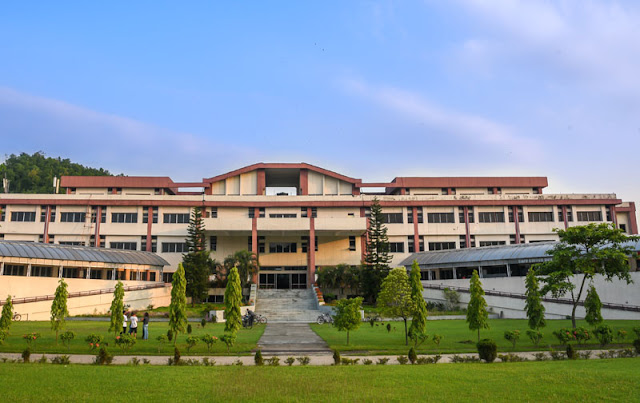


Indian Institute of Technology Guwahati (IITG) and Times Professional Learning (TPL), under its brand The Second Wind (TimesTSW), have launched the Post Graduate Certificate Programme in Cybersecurity and Post Graduate Certificate Programme in Artificial Intelligence & Deep Learning during its announcement of a strategic collaboration with each other.


The Post Graduate Certificate Programme in Cybersecurity (8 month’s course) will enable candidates to gain a foothold in fast-moving job roles like network security specialist, cyber security analyst, cybersecurity architects, cyber security manager, leading up to C-suite positions such as Chief Information Security Officer. The demand for cybersecurity domain experts has doubled in the last year amidst rising global concerns of security breaches and rapid digitalisation across organisations and institutions during the pandemic. 


The Post Graduate Certificate Programme in Artificial Intelligence & Deep Learning (9 month’s course) will provide candidates detailed understanding of AI and Deep Learning through our comprehensive curriculum. The programme focuses on fundamental and advanced learning through subjects like Python programming, data analytics, neural networks, computer vision and image recognition etc. It will help candidates prepare for competitive and cutting-edge job roles such as AI and ML Engineer, Computer Vision Expert, Software R&D Engineer, Cloud Support Engineer, among others, that involve a high level of technical skill and training.
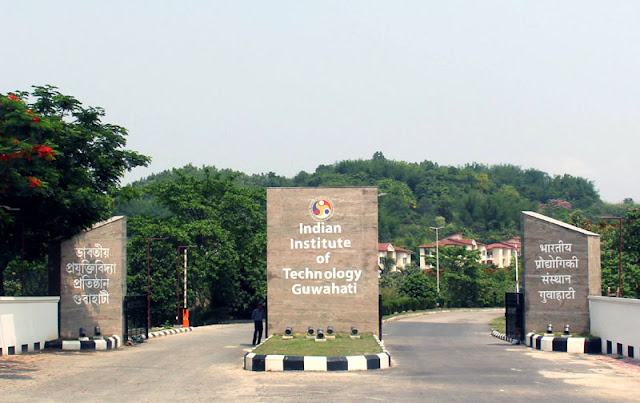
 

Commenting on the launch of the programme, Anish Srikrishna, Chief Executive Officer, Times Professional Learning, said, “Artificial Intelligence and Deep Learning are revolutionising every industry across the globe, and this will be core across all their functions including supply chain and customer management. Digitalisation has become an integral part of our lives. However, it has increased our vulnerability and made us prone to frequent cyberattacks. There is an urgent need to build a robust cybersecurity force to overcome and foil cyberattacks, including malware, ransomware, and phishing attacks. Our Post Graduate Certificate Programmes in Artificial Intelligence & Deep Learning and Cybersecurity in partnership with Indian Institute of Technology Guwahati will create highly skilled and future-ready professionals to build competencies and excel in these domains.”


Speaking at the launch event, Prof. T. G. Sitharam, Director, Indian Institute of Technology Guwahati, said, “IITG has been working to offer professional courses in futuristic areas of technology, science and management. Since DS and AI-based technology has made rapid inroads through its seamless mechanisms and improved productivity through reduced human intervention, IITG has initiated UG and doctoral program in DS & AI through its new Mehta Family School of Data Science and Artificial Intelligence. With the greater adoption of technology, there is a growing need for people with the best-in-class technical skill sets to meet this demand. Our collaboration with Times TSW for these programmes will fulfil the requirements in DS/AI/DL and Cybersecurity across sectors. The curriculum is meticulously developed with foundational and advanced subjects to provide our learners with comprehensive knowledge leading across these specialised domains conforming to industry requirements. These programmes will enable professionals to upgrade their skills, knowledge about evolving technologies and upscale in their career graph. We look forward to collaborate on few more courses in the future.”


Applicants who have a bachelor’s degree with a minimum of 50 per cent marks and at least two years of work experience in IT or software development would be eligible for the course. Candidates will receive certificates issued by the Indian Institute of Technology Guwahati and Times TSW on completing the programme. 


These programmes will address the industry requirements, help working professionals to upskill, and enhance their repertoire of knowledge in the field of AI, DS, DL, and cybersecurity. These programmes incorporate live instructor-led sessions conducted over the weekends by top experts from IIT Guwahati and Times TSW faculty members along with industry experts. Students will take part in a Capstone project where they will demonstrate the skills, they have acquired by solving real-world business problems and include a five-day immersive learning experience at the IIT Guwahati Campus.


Course Links: Post Graduate Certificate Program in Artificial Intelligence & Deep Learning | IIT Guwahati - TimesTSW

Post Graduate Certificate Program in CYBERSECURITY | IIT Guwahati - TimesTSW

Faculty member Steven Wilkinson named next director of the MacMillan Centre


 Steven I. Wilkinson, the Nilekani Professor of India and South Asian Studies, has been appointed the next Henry R. Luce Director of the Whitney and Betty MacMillan Center for International and Area Studies at Yale, Provost Ben Polak has announced. He will begin in his new post on July 1.

Wilkinson, who is also a professor of political science and international affairs, has focused his research on the causes of ethnic violence, corruption in politics, and civil-military politics in South Asia. He is the author of “Votes and Violence: Electoral Competition and Ethnic Riots in India” and “Army and Nation: India’s Military and Democracy since Independence.” He is the editor of “Religious Politics and Communal Violence in India” and co-editor of “Patrons or Policies: Patterns of Democratic Accountability and Political Competition.” His current research project, co-authored with Saumitra Jha of Stanford University, looks at the effects of war on individual political behavior and conflict, through cases as diverse as the French Revolution and the partition of India.

A native of Scotland, Wilkinson received his first degree (in history) from the University of Edinburgh. He earned his M.A. in history at Duke University, where he also began his teaching career. He then taught at the University of Chicago, where he chaired the university’s interdisciplinary Committee on Southern Asian Studies, before coming to Yale in 2009.

Over the past decade Professor Wilkinson has contributed his insights to numerous strategic initiatives for the university, serving on advisory groups ranging from the Faculty of Arts and Sciences Senate Implementation Committee to the Provost’s Advisory Committee on International Affairs to the recent Advisory Committee on the Future of the Jackson Institute,” said Polak in his announcement. “He has been a member of the South Asian Studies Council at the MacMillan Center since he joined the Yale faculty, and he is in his second term chairing the Department of Political Science, a position he has held since 2014. The Faculty of Arts and Sciences’ dean’s office will now begin the process of identifying his successor as department chair.”

Steven Wilkinson has been a very effective chair of political science,” says Pericles Lewis, vice president for global strategy and deputy provost for international affairs, who chaired the faculty advisory committee for the MacMillan Center’s new director. “With a background in area studies and wide-ranging interests in history and comparative politics, he is the kind of broad-minded academic leader who will continue the central role of the MacMillan Center as a university-wide resource for international and area studies.”

Ana de la O Torres, an associate professor of political science and an affiliate of the MacMillan Center, called Wilkinson “an outstanding interdisciplinary scholar” whose work “helps us understand important social problems, including the political roots of communal violence, civil-military relations, and the relation between war and political change in South Asia.” She added: “Along with his intellectual heft, Professor Wilkinson brings an outstanding ability to lead in an effective and kind way. In the political science department, we have benefitted enormously from his broad vision, his tireless dedication to academic excellence, and his ability to work with the various groups in the department and across the university. I think that he will be an excellent leader of the vibrant and diverse intellectual community at MacMillan, and I look forward to continue working alongside him at the center.”

Wilkinson will succeed Ian Shapiro, Sterling Professor of Political Science and professor in the Institute for Social and Policy Studies and of management, who has served as director of the MacMillan Center for 15 years.
Ian encouraged me and many other faculty to come to Yale by emphasizing what its resources and programs could do to support interdisciplinary research, for faculty and our students,” says Wilkinson. “MacMillan, through its many councils, programs, and initiatives, has been a vital part of my time here at Yale. I have particularly appreciated Ian’s efforts to improve graduate student funding for dissertation fieldwork, which makes Yale a leader in supporting real engagement in the areas we study. He has done this all with vision, efficiency, and a great sense of humor.”

In his announcement, Polak thanked Lewis and the faculty advisory committee, and noted that he joined President Peter Salovey and many others across the campus in being grateful for Shapiro’s years of service as director. “The thriving MacMillan Center that we know today was shaped by his hands, and we are fortunate to know that it will continue to flourish under Professor Wilkinson’s leadership in the years to come,” the provost said.

Shapiro called Wilkinson “an outstanding, inspired choice,” adding, “I can’t think of anyone better qualified to take the MacMillan Center, and international and area studies at Yale, to the next level.”

IIT Roorkee researchers develop a new non-invasive method of detecting Breast & Ovarian Cancer


The team worked on a newer approach of detection through salivary proteins
Researchers at the Indian Institute of Technology Roorkee have identified a new method of detecting Breast & Ovarian cancers, two of the worst forms of cancer, which are responsible for approximately one third of all cancers that occur in women and one fifth of all cancer related deaths worldwide. The research published in the journal, ‘FASEB Bio advances’ details the use of Whole Saliva as a body fluid for early detection of Breast and Ovarian cancers, as opposed to the traditional method of using blood samples. The research team led by Prof. Kiran Ambatipudi from the Biotechnology Department at IIT Roorkee have got a breakthrough in identifying certain proteins present in the saliva, which act as potential bio markers indicative of Breast & Ovarian cancer metastasis.
The team compared the samples from healthy individuals against the samples collected from stage IV Breast & Ovarian cancer patients and Ovarian cancer patients who had undergone at least 3 cycles of Neoadjuvant  chemotherapy. The salivary proteins were analyzed by mass spectrometry indicative of pathophysiology of breast and ovarian cancers and were compared to healthy and ovarian chemotherapy subjects. Collectively, 646 proteins were identified, of which 409 proteins were confidently identified across all four groups. In addition to 409 identified proteins, 352 proteins were common in all groups, while 57 were either present/absent exclusively in one group or common in any two/three groups.
Speaking about the research, Prof. Kiran Ambatipudi, Department of Biotechnology, IIT Roorkee said, “Due to the heterogeneous and asymptomatic nature of breast and ovarian cancers, their early detection has been difficult using traditional methods such as mammography, blood flow patterns by color‐flow Doppler imaging and transvaginal ultrasound examination, due to high diagnostic costs and radiation exposure. Our attempt was to utilize saliva as a non-invasive sample source to identify specific protein biomarkers, which indicate breast & ovarian cancer metastasis. In patients who have undergone three cycles of chemotherapy, the salivary proteins can also act as an indicator of the patient’s response to chemotherapy.”
“Although it is essential to clinically validate these proteins in a large cohort of subjects but the results of the present study serve as an initial step towards the development of saliva-based clinical tests.”, he added

Legendary Filmmaker Ramesh Sippy to set a new benchmark with his dream film school Ramesh Sippy Academy Of Cinema and Entertainment


After revolutionizing Indian Cinema over four decades, legendary filmmaker Ramesh Sippy is ready to set a new benchmark in the field of education. He aims to give power to the dreams of young filmmaking aspirants and impart his accumulated wisdom to future generations of the industry through graduation programs at Mumbai University, in association with Garware Institute of Career Education and Development. Legendary actor Mr. Amitabh Bachchan launched the Ramesh Sippy Academy Of Cinema and Entertainment (RSACE) at an event held in Mumbai along with Vice Chancellor, Mr. Sanjay Deshmukh and Director – GICED, Mr. Anil V. Karnik. Managing Director of RSACE, Kiran Joneja Sippy introduced the academy while the Director & Dean, Mukesh Sharma highlighted the courses that will be offered. The other board of directors are Ms. Hema Malini, Mr. Manmohan Shetty and Mr. Rohan Sippy.

Ramesh Sippy Academy Of Cinema and Entertainment, aims at providing world class quality education for entire gamut of Media & Entertainment industry related courses, covering all major specialisations like Bachelor in Film Art (3 years), Bachelor in Film Production (3 years), Bachelor in Script Writing (3 years), Bachelor in Animation (3 years) and Bachelor in Visual Effects (3 years). The academy’s website www.rsace.com shares all the key information with regard to the courses and the management.


Ramesh Sippy Academy Of Cinema and Entertainment (RSACE) has a tie-up with the highly respected and recognised Mumbai University wherein the students will be gaining comprehensive knowledge and graduating with a degree in various aspects of film production and entertainment.

“There has been a fundamental change over the years in the way cinema and entertainment is consumed. In addition to cinema screens and televisions at home, there is now a plethora of devices at one’s disposal. The internet has become a major source for consuming content – computers, laptops, mobile phones, tablets define new-age entertainment. At RSACE, it’s our endeavour to equip filmmakers with the skills required to tackle new-age media. While the mediums have changed, the ethos of cinema and entertainment remains untouched. At its very core, cinema is all about stories. RSACE’s vision is to produce the next generation of movie mavericks.” said Mr Ramesh Sippy Founder Ramesh Sippy Academy Of Cinema and Entertainment

“It is an onerous task and we will work hard to ensure we create the right environment to bring out the best in the students so that they become the next generation of talent for the industry” shares Mrs Kiran Joneja Sippy, Managing Director, RSACE

''With the rapid growth of industry in India, we plan to provide world class education with hands on training in various facets of the Media and Entertainment Industry. All the courses at RSACE have been specially designed by industry experts” said Mr. Mukesh Sharma, Director and Dean, RSACE

The courses at RSACE will be imparted through a blended learning methodology. The institute will provide the students with a unique opportunity to garner exposure to a live environment and benefit from interfacing with renowned industry professionals.